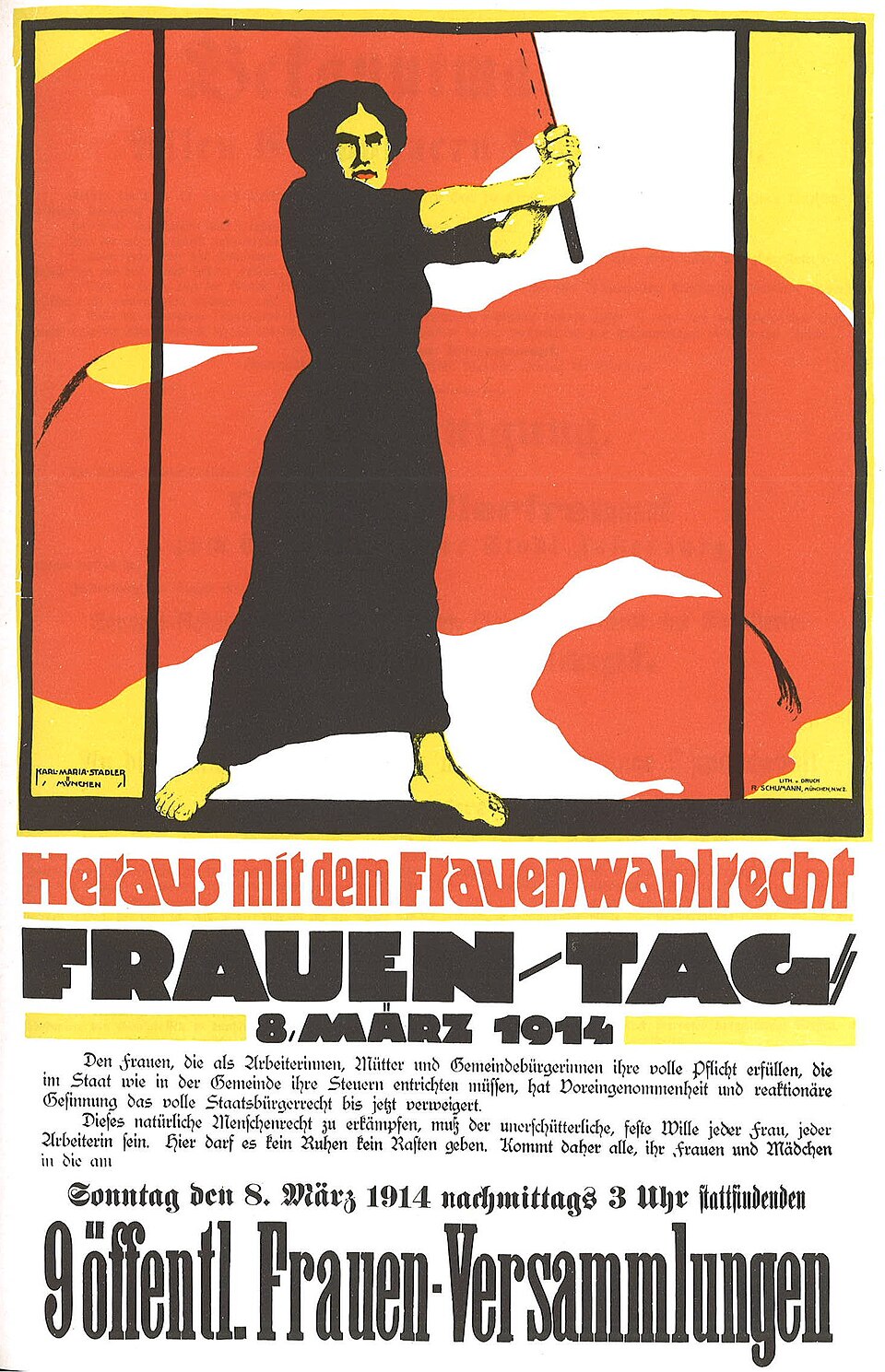
Beyond Brunch: International Women's Day's Legacy of Labor, Suffrage, and Social Change
For many, International Women's Day (IWD) on March 8 evokes images of flowers, celebratory brunches, and messages of empowerment. While acknowledging women's achievements is vital, reducing this global observance to mere festivity risks obscuring its profound and often radical origins. Far from a contemporary marketing initiative, International Women's Day is deeply rooted in early 20th-century struggles for labor rights, universal suffrage, and a more equitable society. It stands as a testament to the collective power of working-class women who dared to demand change against immense odds.
To truly honor International Women's Day, we must look beyond surface-level celebrations and delve into the powerful history that shaped it—a history forged in the crucible of socialist campaigns, factory protests, and revolutionary fervor. It's a day not just to celebrate how far we've come, but to reignite the spirit of advocacy for how much further we still need to go.
The Genesis of a Movement: Working-Class Women Demand Justice
The seeds of International Women's Day were sown in the harsh realities of early 20th-century industrialization. Across the globe, women, particularly immigrants, formed the backbone of burgeoning industries, enduring inhumane working conditions. In the textile and garment factories of New York City, for instance, women toiled for 12 to 16 hours a day, earning abysmal wages in unsafe environments. This acute economic exploitation, far from being a standalone "women's issue," was framed by socialist organizers as an inherent consequence of capitalist systems.
One pivotal moment occurred on February 28, 1908, when approximately 15,000 women garment workers in New York City staged a mass protest. Their demands were clear and comprehensive: an end to the brutal workdays, better pay, safer conditions, and crucially, the right to vote. This demonstration, orchestrated by members of the Socialist Party of America, underscored the inseparability of women's economic grievances from broader societal and political oppression. Parallel agitations against similar wage suppression and factory hazards were also unfolding among female textile laborers in Germany and Austria, often under socialist banners that championed class solidarity.
These powerful, localized actions set the stage for a unified global movement. In 1910, at the International Conference of Socialist Women in Copenhagen, German socialist Clara Zetkin proposed the creation of an annual International Women's Day. Her vision was to establish a dedicated day, much like May Day, to galvanize proletarian women's demands against capitalist exploitation, for labor protections, and for their fundamental right to vote. The first celebrations, featuring rallies focused on suffrage and ending employment discrimination, subsequently took place on March 19, 1911, in Austria, Denmark, Germany, and Switzerland, marking a significant step towards a formalized global observance. To understand more about these foundational moments, explore The Socialist Origins: How March 8 Became International Women's Day.
The Spark on March 8th: Petrograd and Revolution
While the initial observance took place in March 1911, the date of March 8 became irrevocably fixed for International Women's Day following a monumental event in Russia. In 1917, as World War I raged, men were largely absent at the front lines, leaving women to shoulder the burden of sustaining society amidst severe food shortages and a government unresponsive to their pleas. On February 23rd in the Julian calendar (which translates to March 8th in the Gregorian calendar), tens of thousands of Russian women, primarily textile workers, defiantly took to the streets of Petrograd.
Their rallying cry was "Bread and Peace"—a demand for an end to the war, an end to food scarcity, and an end to the autocratic rule of Tsar Nicholas II. This audacious strike, occurring despite official warnings and military presence, quickly escalated. Within days, it galvanized other workers and soldiers, snowballing into widespread unrest that ultimately precipitated the Russian February Revolution. The sheer scale and determination of these women's actions directly led to the tsar's abdication and significantly contributed to Russian women being granted voting rights soon after. This powerful demonstration of women's collective action not only enshrined March 8 as the permanent date for International Women's Day but also showcased their crucial role in igniting a major political upheaval.
From Class Struggle to Global Recognition: The Evolving Narrative of International Women's Day
Following its instrumental role in the Russian Revolution, International Women's Day was embraced by the Soviet Union, evolving into a state holiday that emphasized women's emancipation under communism. Yet, its influence was not confined to socialist states. Throughout the 20th century, IWD continued to be a platform for protests against war, inequality, and patriarchy globally. However, it wasn't until 1977 that the United Nations formally recognized International Women's Day, solidifying its status as an annual observance amid broader labor and peace advocacy efforts.
This formal recognition marked a significant shift, broadening the day's focus from its explicit Marxist class struggle origins to encompass a more universal celebration of women's cultural, political, and socioeconomic achievements. While this expansion brought global attention to women's rights, critics often point to a contemporary trend where corporate and liberal reinterpretations sometimes obscure its foundational anti-capitalist aims. What began as a radical call for systemic change can, at times, be diluted into a generic message of empowerment, detached from the historical struggle against capitalist exploitation and intersecting forms of oppression. Understanding this evolution is key to appreciating the full spectrum of its significance. Dive deeper into how IWD has adapted over time with From Petrograd Strikes to #BreakTheBias: The IWD Story.
Beyond the Celebration: How to Drive Meaningful Change on International Women's Day and Beyond
While celebrations on March 8 are a welcome acknowledgment of progress, the true spirit of International Women's Day lies in its call to action. It's a day to remember that the fight for gender equality is ongoing, complex, and requires continuous effort. Here's how individuals and communities can engage meaningfully with this powerful observance:
- Educate and Reflect: Take time to learn about the diverse and intersectional history of women's rights movements. Understand that the struggles of immigrant women, women of color, and LGBTQ+ women have often been marginalized even within feminist narratives. Reading historical accounts and supporting diverse feminist scholars can deepen your understanding.
- Advocate for Policy Change: Go beyond symbolic gestures. Support organizations and political initiatives campaigning for concrete policy changes such as equal pay legislation, universal affordable childcare, comprehensive parental leave, reproductive rights, and stronger protections against gender-based violence. Your voice can make a difference in local and national dialogues.
- Challenge Bias and Stereotypes: Actively identify and dismantle gender bias in your daily life, workplace, and social interactions. This includes calling out microaggressions, questioning gender roles, promoting inclusive language, and advocating for equitable opportunities in hiring, promotions, and leadership roles.
- Support Women-Led Initiatives: Patronize women-owned businesses, donate to women's shelters and advocacy groups, and amplify the voices of women leaders, artists, and innovators. Investing in women's empowerment strengthens entire communities.
- Mentor and Amplify: If you are in a position to do so, mentor younger women or those entering your field. Actively listen to and amplify the voices of women, ensuring their contributions are recognized and valued. Create spaces where women feel empowered to share their perspectives and experiences.
- Engage in Global Solidarity: Recognize that gender inequality manifests differently around the world. Educate yourself about global women's issues, such as access to education, healthcare, and safety in conflict zones, and support international organizations working on these challenges.
- Vote with Purpose: Exercise your democratic right to vote for candidates who champion gender equality and social justice. Research their stances on issues affecting women and hold elected officials accountable for their commitments.
Conclusion
International Women's Day is more than an annual holiday; it's a powerful reminder of the historical sacrifices, fierce determination, and enduring legacy of women who fought for fundamental rights. From the demanding factory floors of early 20th-century America and Europe to the revolutionary streets of Petrograd, the fight for women's suffrage, labor protections, and social change has profoundly shaped our world. While its narrative has broadened over time, the core message of IWD remains critically relevant: persistent advocacy is necessary to dismantle inequality and patriarchy in all its forms.
As we mark March 8 each year, let us embrace its full history—the labor struggles, the socialist calls for justice, and the revolutionary spirit—and recommit ourselves to working towards a future where gender equality is not just celebrated, but fully realized for every woman, everywhere. It is in this commitment that the true legacy of International Women's Day lives on.