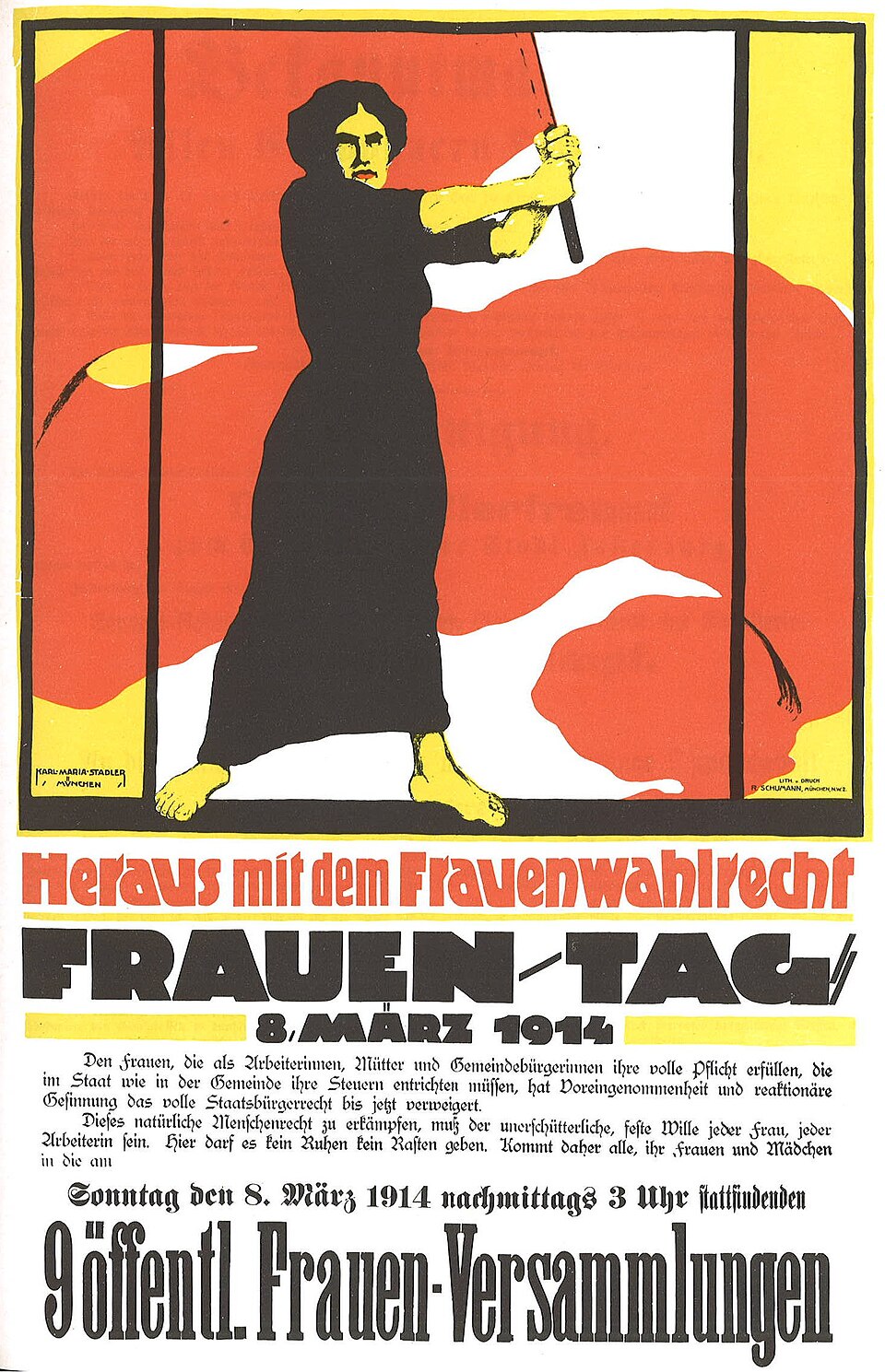
The Socialist Origins: How March 8 Became International Women's Day
Each year on March 8, the world observes International Women's Day (IWD), a global holiday dedicated to celebrating the cultural, political, and socioeconomic achievements of women. Today, it’s a vibrant tapestry of events, ranging from celebratory gatherings and corporate acknowledgments to powerful protests demanding gender equality. Yet, beneath the widespread recognition and often commercialized fanfare, lies a rich and radical history rooted deeply in early 20th-century socialist movements and the relentless fight of working-class women against exploitation.
To truly understand International Women's Day, we must journey back to a time when industrial capitalism reigned, and women, particularly those in the working class, faced unimaginable hardships. It was an era where the struggles for women's suffrage, fair labor practices, and the right to unionize were not seen as separate battles but as integral parts of a larger fight against economic oppression and social injustice. This article delves into these foundational socialist origins, tracing how a series of determined protests and a visionary proposal eventually cemented March 8 as a day of global significance.
The Crucible of Class and Gender: Early 20th-Century Protests
The dawn of the 20th century saw women entering the workforce in unprecedented numbers, especially in the burgeoning textile and garment industries. Far from offering liberation, these factories often subjected them to brutal conditions: grueling 12- to 16-hour workdays, pitifully low wages, and perilously unsafe environments. In the United States, a significant portion of these laborers were recent immigrants, often lacking English language skills and thus even more vulnerable to exploitation.
It was against this backdrop of acute economic exploitation that seeds of protest were sown. On February 28, 1908, a pivotal moment occurred in New York City when approximately 15,000 women garment workers, many driven by the desperate need for change, took to the streets. This wasn't just a spontaneous outcry; it was a strategically orchestrated mass demonstration by members of the Socialist Party of America. Their powerful message was clear: women's grievances—from inhumane factory conditions to the denial of the right to vote—were not isolated gender issues but inseparable from the broader system of capitalist oppression.
This New York protest wasn't an isolated incident. It built upon years of prior labor unrest, including recurring strikes in U.S. garment shops where women fought for collective bargaining power, often marginalized by male-dominated unions. Across the Atlantic, similar agitations flared in Europe. Female textile laborers in Germany and Austria, often under the banner of socialist organizations, challenged wage suppression and hazardous factory conditions. These movements highlighted the stark causal links between industrial capitalism's demand for cheap, expendable female labor and the systemic alienation of workers. While these brave actions hadn't yet coalesced into a structured annual observance, they demonstrated an undeniable yearning for change and a growing awareness of class solidarity amongst women.
Clara Zetkin's Vision: Unifying the Proletarian Woman's Struggle
The fragmented yet fervent protests of working women across the globe needed a unifying force, a common platform to amplify their demands. This vision came to fruition through the tireless efforts of Clara Zetkin, a prominent German socialist, women's rights advocate, and leading figure in the international socialist movement. Zetkin recognized the immense potential of creating a designated day for women to collectively voice their demands, much like May Day served for workers' rights.
At the 1910 International Conference of Socialist Women in Copenhagen, a landmark gathering attended by over 100 women from 17 countries, Zetkin proposed the establishment of an annual "International Women's Day." Her aim was clear: to create a unified global event for advancing the specific demands of proletarian women against capitalist exploitation. These demands included universal suffrage, better labor protections, and the right to unionize. There was no fixed date initially, but the concept ignited a flame.
The first celebrations of International Women's Day occurred on March 19, 1911, in Austria, Denmark, Germany, and Switzerland. Rallies drew hundreds of thousands, focusing primarily on securing women's suffrage and ending discrimination in employment. This nascent movement demonstrated the powerful resonance of Zetkin's idea, proving that women, when united, could exert significant pressure for social and political change.
From Petrograd to Permanence: The March 8 Fixation
While the idea of an International Women's Day gained traction, the specific date of March 8 was not immediately established. That fixed date emerged from a dramatic and historically significant event in Russia. In 1917, against the backdrop of World War I, Russia was in turmoil. Men were at the front, leaving women to grapple with severe food shortages and a government unresponsive to their plight.
On March 8, 1917 (which was February 23 in the Julian calendar then in use in Russia), tens of thousands of women textile workers in Petrograd took to the streets. Their cry was for "Bread and Peace," demanding an end to the war, relief from food scarcity, and the downfall of the Tsarist regime. This audacious strike, occurring on International Women's Day, swiftly escalated beyond initial expectations. It garnered support from other workers and soldiers, precipitating the Russian February Revolution and ultimately contributing to the abdication of Tsar Nicholas II. It paved the way for Russian women to be granted voting rights soon after.
The profound impact of this strike, directly linking women's collective action to revolutionary change, cemented March 8 as the permanent date for International Women's Day. It became a powerful symbol of women's agency in shaping history, a testament to their strength in demanding fundamental societal shifts. To learn more about this pivotal moment and its long-term impact, explore From Petrograd Strikes to #BreakTheBias: The IWD Story.
The Evolving Narrative: From Radical Roots to Global Recognition
Following the Russian Revolution, International Women's Day evolved significantly. In the Soviet Union, it transformed into a state holiday, emphasizing women's emancipation under communism and celebrating their contributions to the socialist state. Its global recognition, however, broadened considerably later in the 20th century.
In 1977, the United Nations formally recognized International Women's Day, adopting it as an annual observance and aligning it with broader labor, peace, and human rights advocacy. This formal endorsement marked a turning point, propelling IWD into mainstream global consciousness. Today, the UN often announces specific themes for IWD, such as 2022's "Gender equality today for a sustainable tomorrow," guiding international discussions and initiatives.
However, this journey from its radical origins has not been without its complexities. While the day still features protests against war, inequality, and patriarchy, critics often point to its increasing detachment from its original anti-capitalist aims. Contemporary narratives, particularly those promulgated by corporate and liberal reinterpretations, frequently present IWD as a generic celebration of "women's empowerment," often obscuring its foundational ties to Marxist class struggle and the dire conditions that first spurred its creation. The focus often shifts to individual achievements rather than systemic change, raising questions about whether the radical spirit of the day is being diluted.
Understanding these origins offers a crucial lens through which to view current celebrations. It reminds us that the fight for gender equality is inextricably linked to economic justice and systemic change. While appreciating modern themes like #BreakTheBias, it's vital to remember the immense sacrifices made by working-class women and socialist activists who laid the groundwork for this day. For a deeper dive into how IWD's legacy extends beyond modern celebrations, consider reading Beyond Brunch: IWD's Legacy of Labor, Suffrage, and Social Change.
Reclaiming IWD's Radical Spirit: Tips for Meaningful Observance
How can we honor the original socialist and labor-focused spirit of International Women's Day in a contemporary context? Here are a few ways:
- Educate Yourself and Others: Delve into the history of women's labor movements, suffrage campaigns, and the role of socialist thinkers like Clara Zetkin. Share this knowledge to foster a deeper understanding beyond superficial celebrations.
- Support Ethical Labor Practices: Reflect on your consumer choices. Support brands committed to fair wages, safe working conditions, and strong labor rights, particularly for women in global supply chains. Advocate for transparency in production.
- Champion Economic Justice: Engage with issues related to pay equity, living wages, affordable childcare, and parental leave. These are modern manifestations of the original demands for labor protection and economic equality for women.
- Advocate for Systemic Change: Participate in or support organizations working for policy changes that dismantle systemic inequalities, whether through legislation, unionization efforts, or social advocacy. Remember that individual empowerment thrives within just systems.
- Amplify Marginalized Voices: Just as early IWD focused on the most exploited working-class women, today we must prioritize the voices and struggles of women facing intersecting forms of oppression, including women of color, LGBTQ+ women, and women with disabilities.
Conclusion
International Women's Day, observed every March 8, is far more than a day for generic empowerment or floral gifts. Its powerful roots lie in the fierce struggles of working-class women, propelled by socialist ideals, demanding fundamental changes to oppressive economic and social structures. From the garment factories of New York to the revolutionary streets of Petrograd, it was the collective courage and unwavering determination of these women, often guided by socialist principles, that gave birth to this global day of recognition. By understanding and acknowledging these profound origins, we can move beyond superficial celebrations and truly honor the legacy of International Women's Day, using it as a powerful platform to continue the fight for genuine gender equality and social justice for all.